HydraPlant

HydraPlant Case Study: Designing an app that makes plant care easier and more consistent.

HydraPlant Case Study: Designing an app that makes plant care easier and more consistent.

HydraPlant

Project overview


Project overview


The product: 

A user-centered application designed to simplify daily plant care through timely watering reminders, detailed species descriptions, light recommendations, and guidance on pruning and fertilizing.

Project duration:

October 28th to November 25th, 2025 (4 weeks)

Project overview


The product: 

A user-centered application designed to simplify daily plant care through timely watering reminders, detailed species descriptions, light recommendations, and guidance on pruning and fertilizing.

Project duration:

October 28th to November 25th, 2025 (4 weeks)

The problem: 

With busy routines, users often forget to care for their plants consistently. Without accessible guidance on watering frequency and plant needs, many end up losing their plants or feeling frustrated with the process.

The goal: 

Design an app that simplifies daily plant care through reminders, essential plant information, and easy-to-follow maintenance guidance, enhancing the overall user experience.

The problem: 

With busy routines, users often forget to care for their plants consistently. Without accessible guidance on watering frequency and plant needs, many end up losing their plants or feeling frustrated with the process.

The goal: 

Design an app that simplifies daily plant care through reminders, essential plant information, and easy-to-follow maintenance guidance, enhancing the overall user experience.

The problem: 

With busy routines, users often forget to care for their plants consistently. Without accessible guidance on watering frequency and plant needs, many end up losing their plants or feeling frustrated with the process.

The goal: 

Design an app that simplifies daily plant care through reminders, essential plant information, and easy-to-follow maintenance guidance, enhancing the overall user experience.

The goal: 

Design an app that simplifies daily plant care through reminders, essential plant information, and easy-to-follow maintenance guidance, enhancing the overall user experience.

The problem: 

With busy routines, users often forget to care for their plants consistently. Without accessible guidance on watering frequency and plant needs, many end up losing their plants or feeling frustrated with the process.

My role: UX/UI Designer


Responsibilities: 


•User research and target audience definition


•Creation of user flows and wireframes


•Design of high-fidelity screens and prototypes


•Development of the design system (colors, typography, icons)


•Feedback gathering and design iteration.

My role: UX/UI Designer


Responsibilities: 


•User research and target audience definition

•Creation of user flows and wireframes

•Design of high-fidelity screens and prototypes

•Development of the design system (colors, typography, icons)

•Feedback gathering and design iteration.

User research: summary


User research: summary


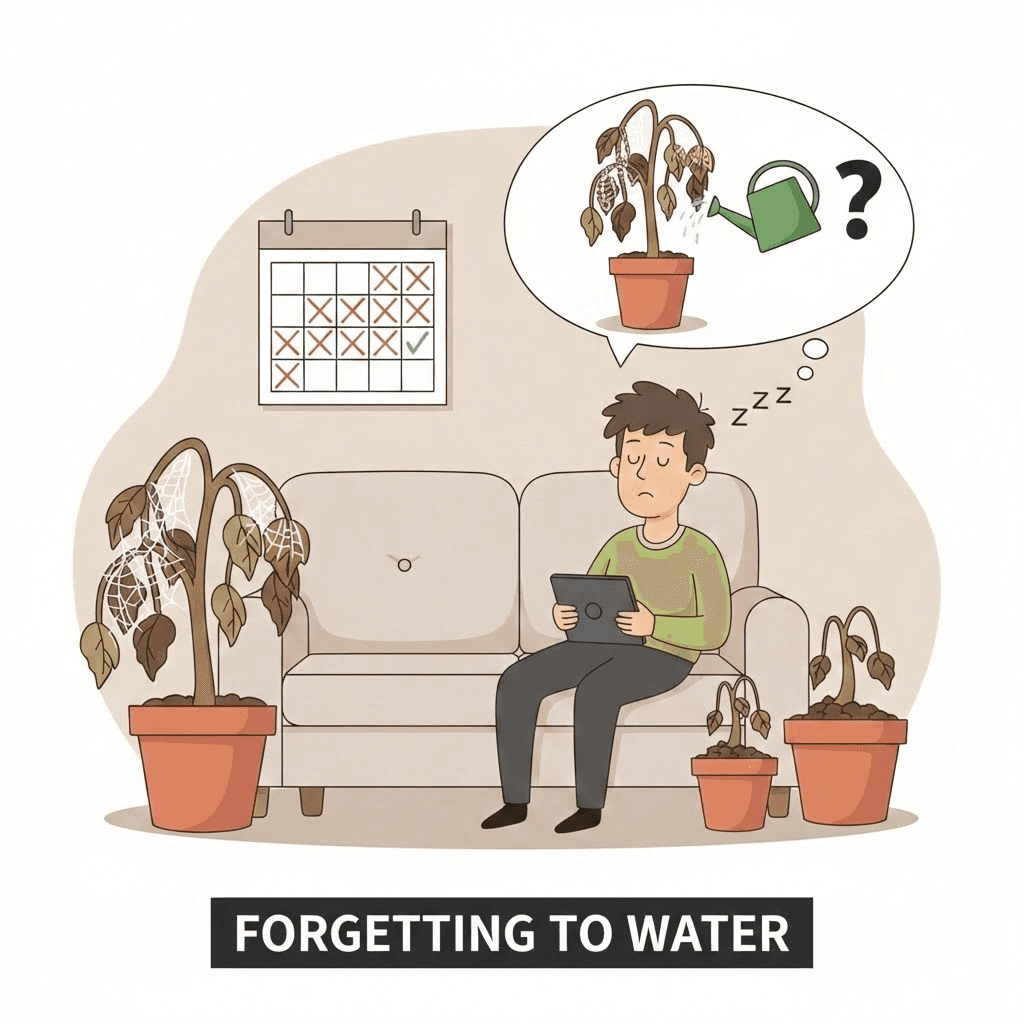
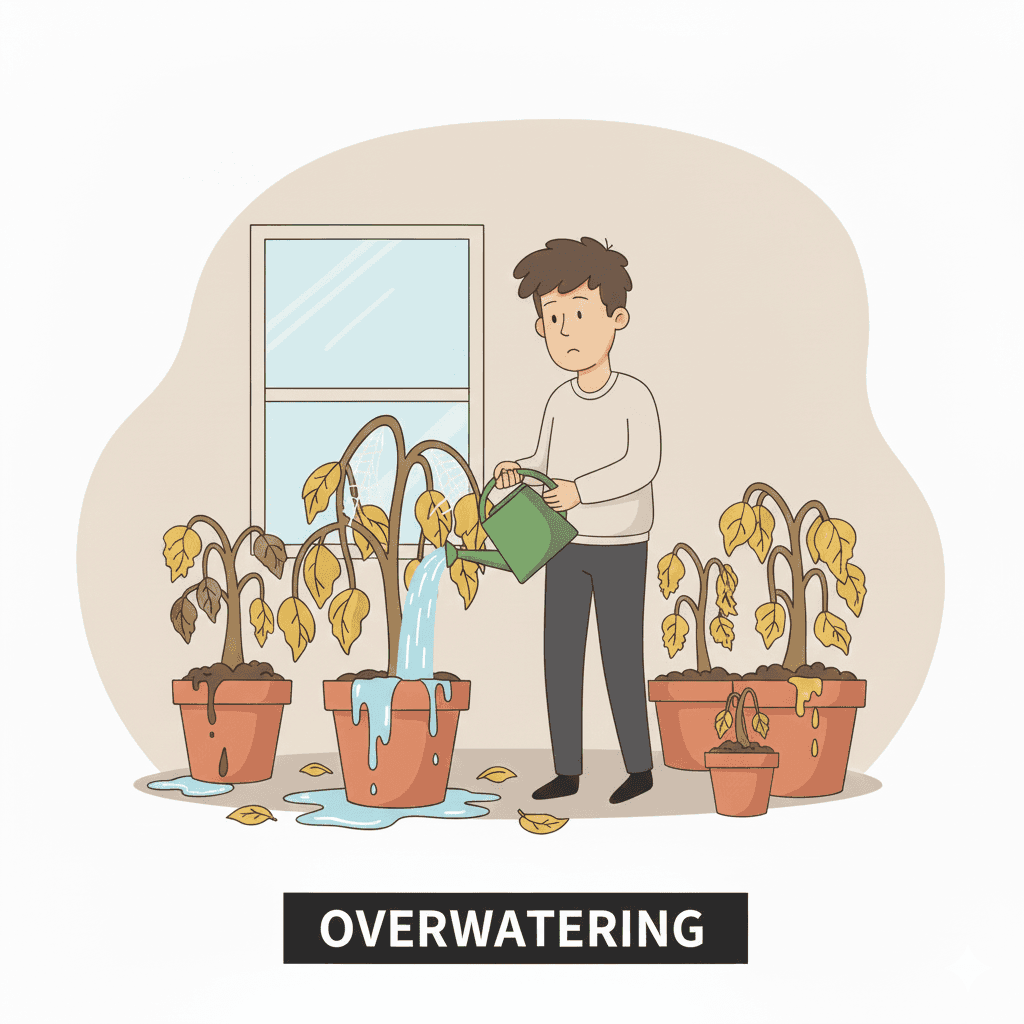
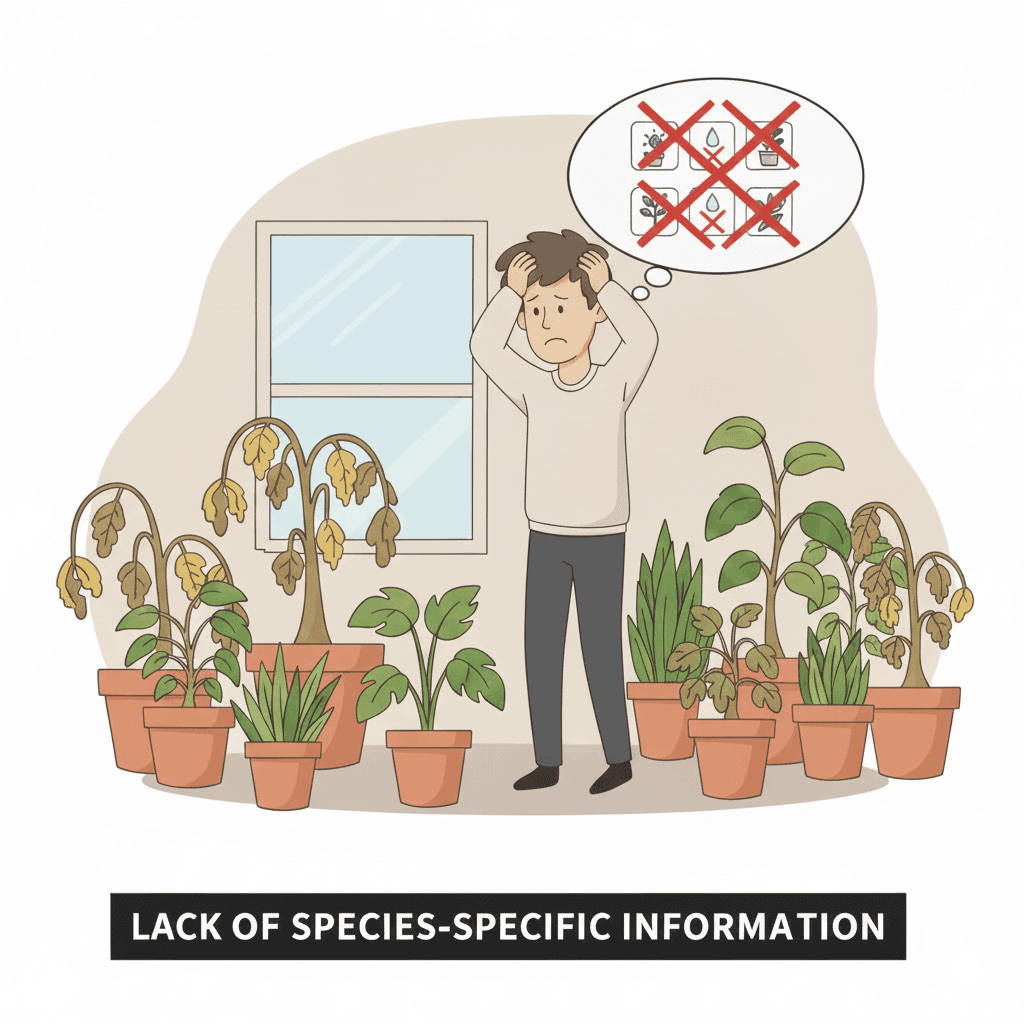
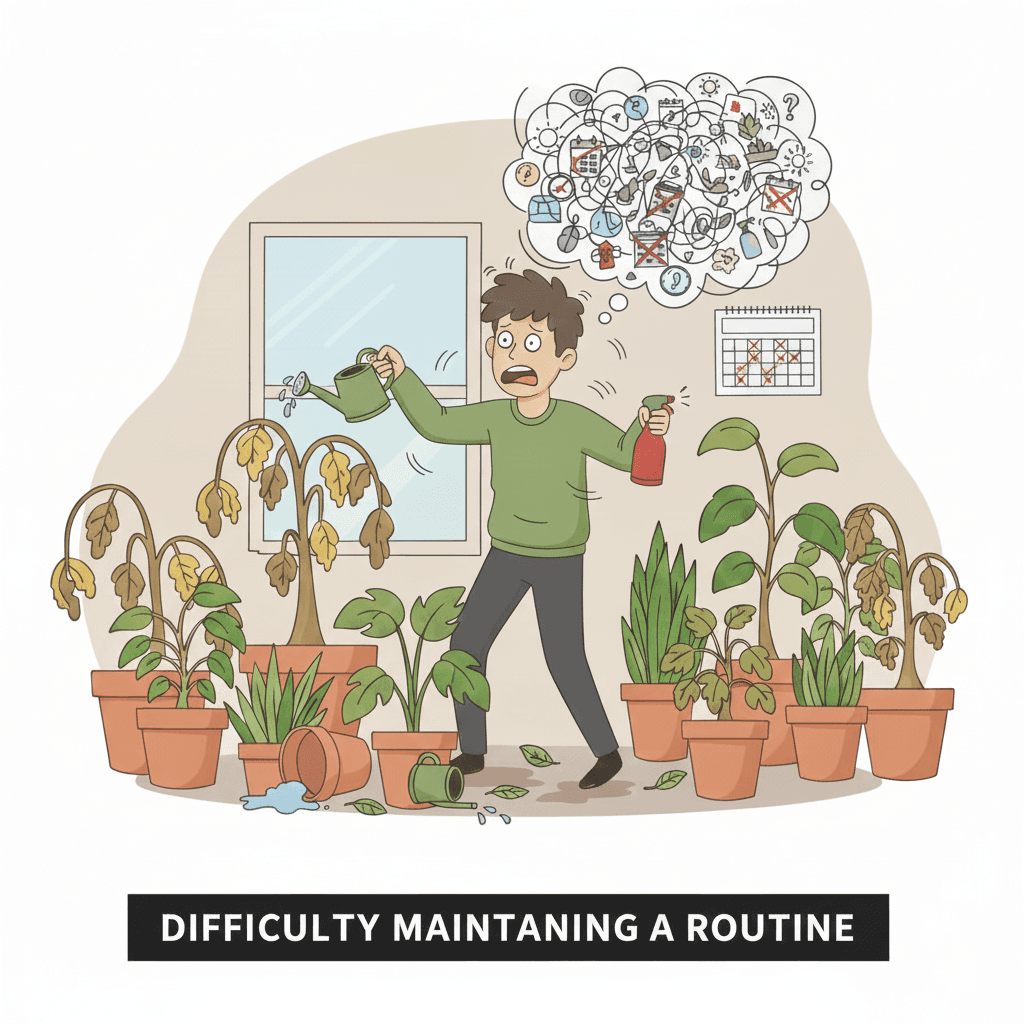
For this project, I interviewed plant owners from my family and social circle. I initially assumed their main concern was remembering to water plants, but research showed broader needs: many struggled with over- or underwatering and lacked knowledge about each plant’s care. Users wanted a simple, reliable way to keep plants healthy.

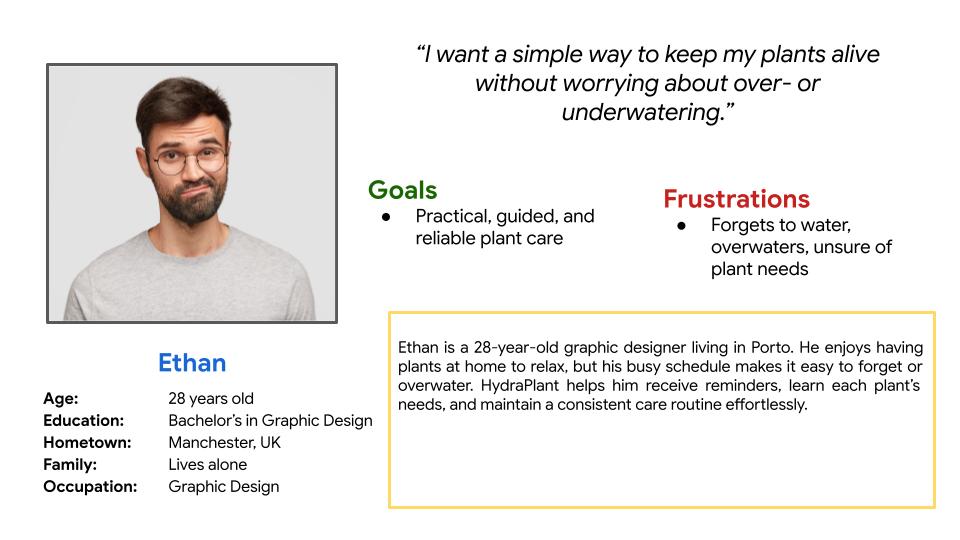
These insights helped me create a persona capturing both the frustration of inconsistent care and the motivation for an easy, guided solution.

For this project, I interviewed plant owners from my family and social circle. I initially assumed their main concern was remembering to water plants, but research showed broader needs: many struggled with over- or underwatering and lacked knowledge about each plant’s care. Users wanted a simple, reliable way to keep plants healthy.

These insights helped me create a persona capturing both the frustration of inconsistent care and the motivation for an easy, guided solution.

User research: pain points

User research:
pain points

Persona: Ethan

Persona: Ethan

Problem statement:

Fernanda is a 36-year-old mother of two and shop assistant from Guimarães who needs  an easy way to sell and buy children’s clothes because her kids outgrow them quickly, leaving her with unused clothes that take up space and increase expenses. 
User journey map

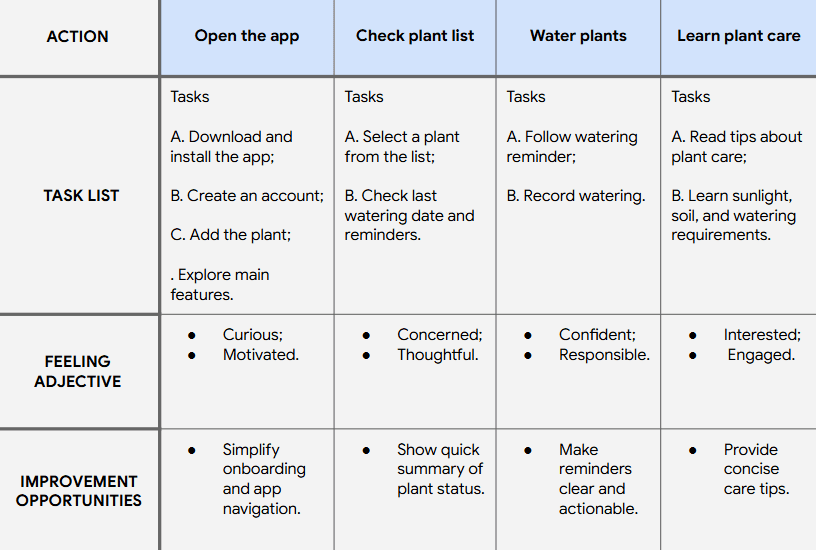
User journey map

Goal:

Keep his plants healthy by watering them correctly and consistently

Goal:

Keep his plants healthy by watering them correctly and consistently

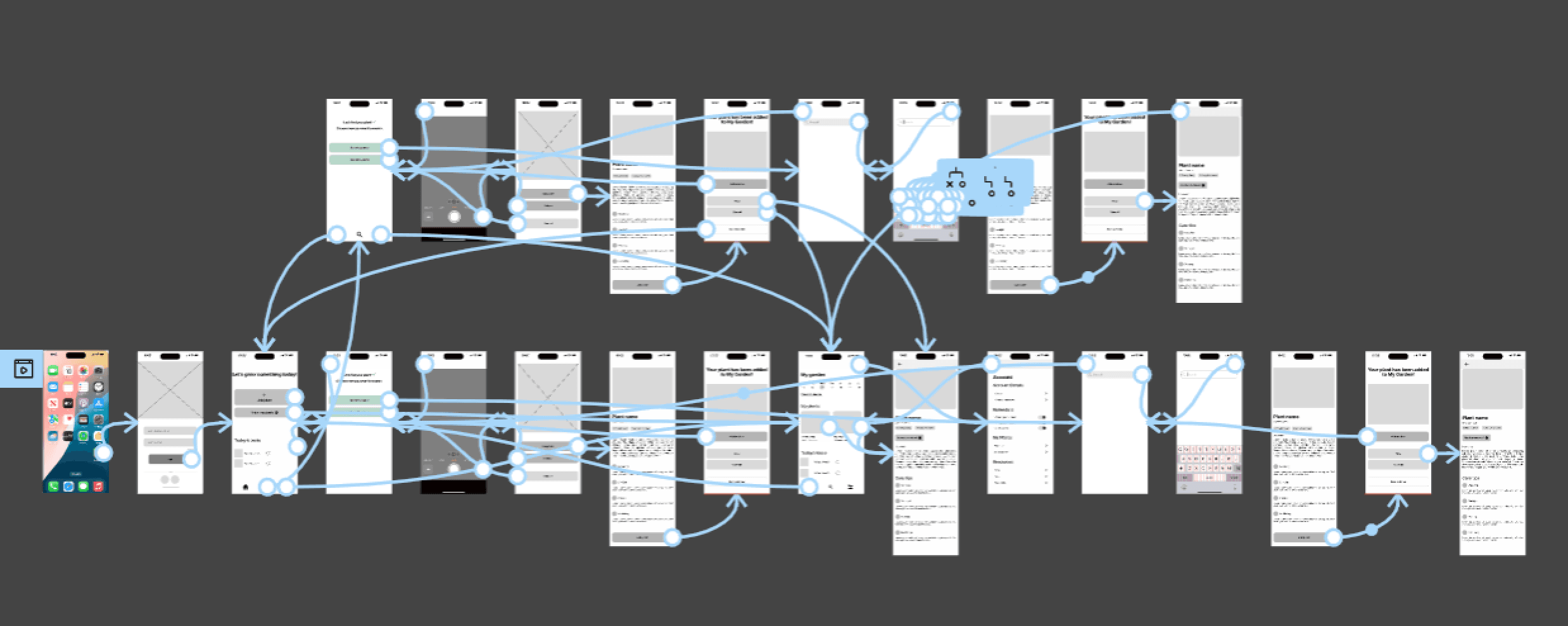
Sitemap

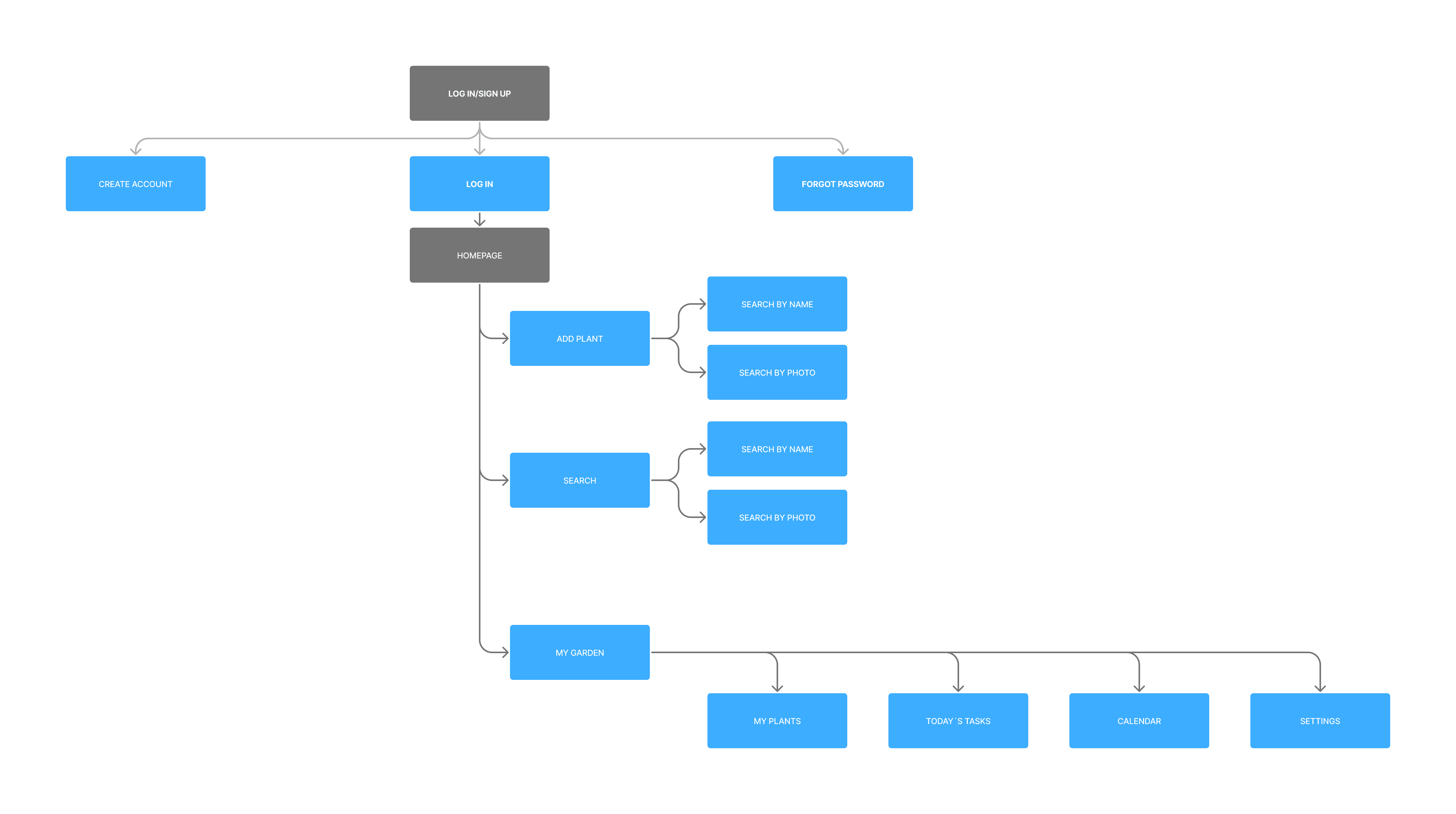
Sitemap

Paper wireframes

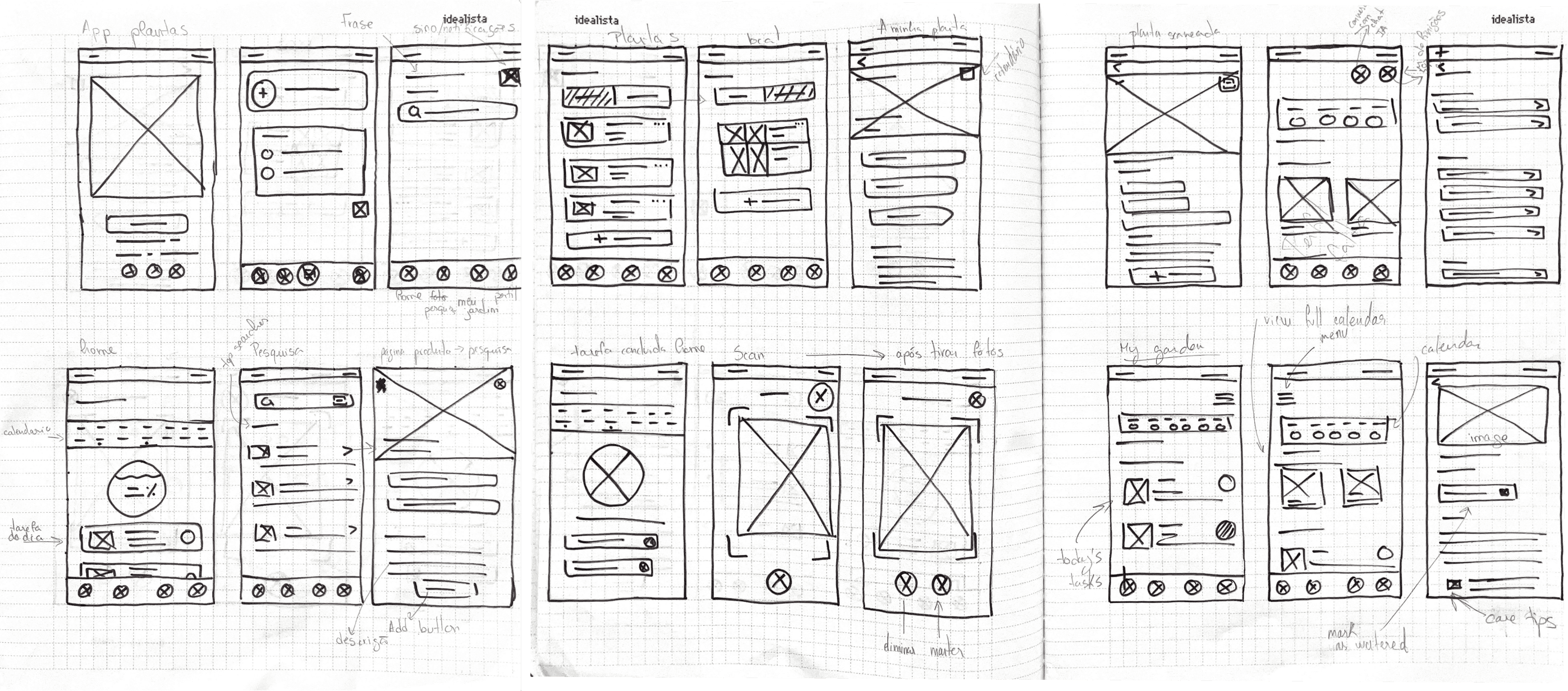
Paper wireframes

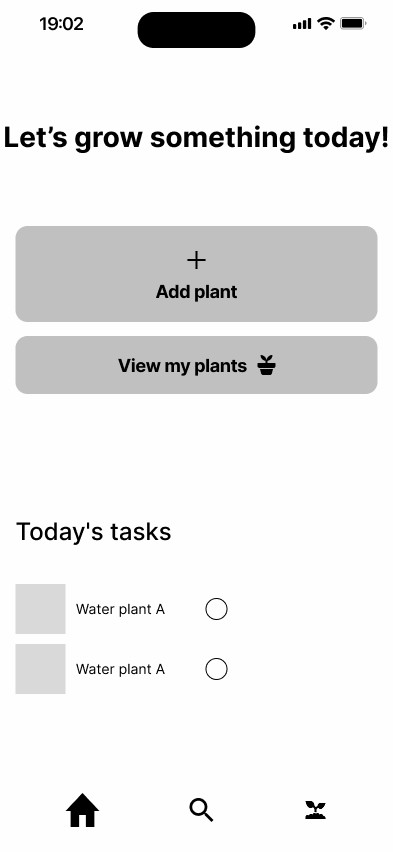
Digital wireframes

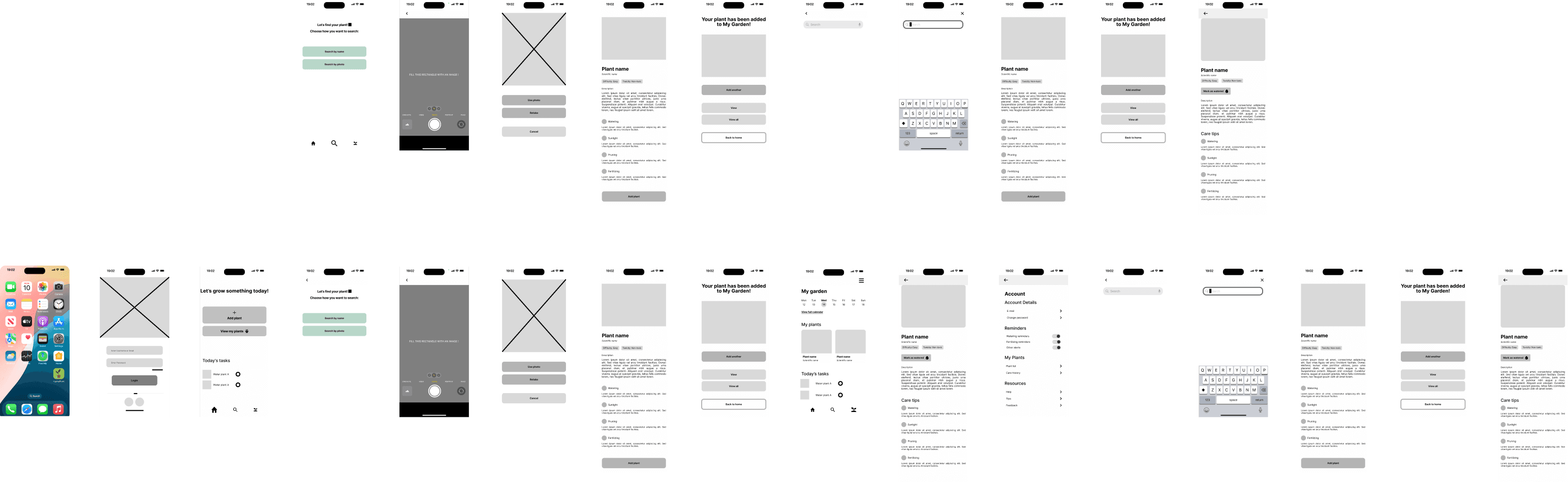
Digital wireframes

Low-fidelity prototype

Low-fidelity prototype

Usability study: parameters
Study Type:
Study Type:

Unmoderated usability study


Participants:
Participants:

5 participants


Location:
Location:

Vila Real, Portugal


Lenght:
Lenght:

8-10 min


Usability study: findings

Based on the insights gathered during the usability study, the main findings and design-related problems were identified.

1

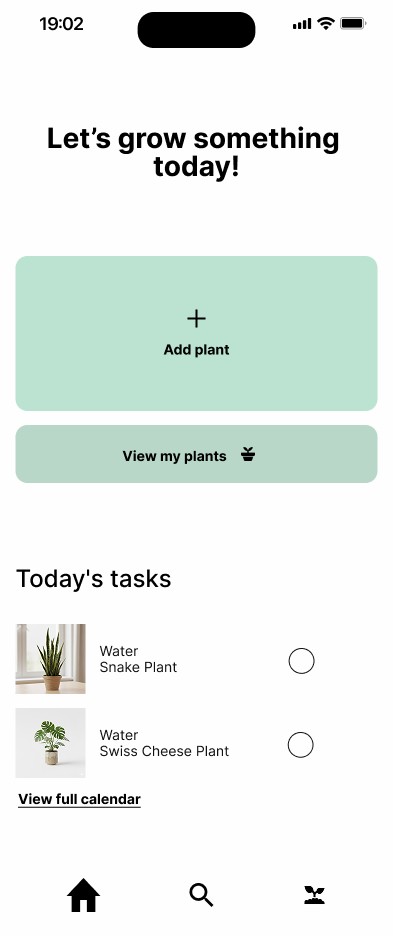
Users may feel uncertain about what to do when entering the app for the first time. The “Add Plant” action is not visually prominent enough, which can cause users to feel lost and unsure about the first step they should take within the app.

2

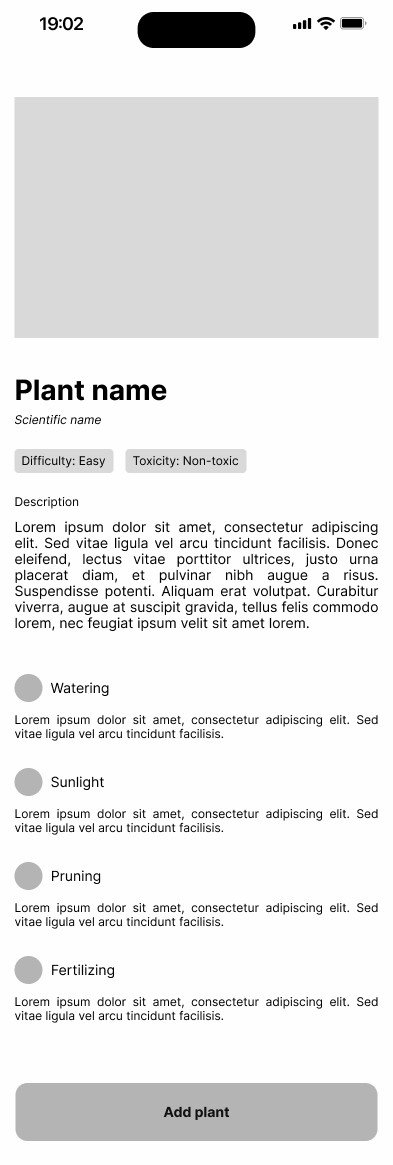
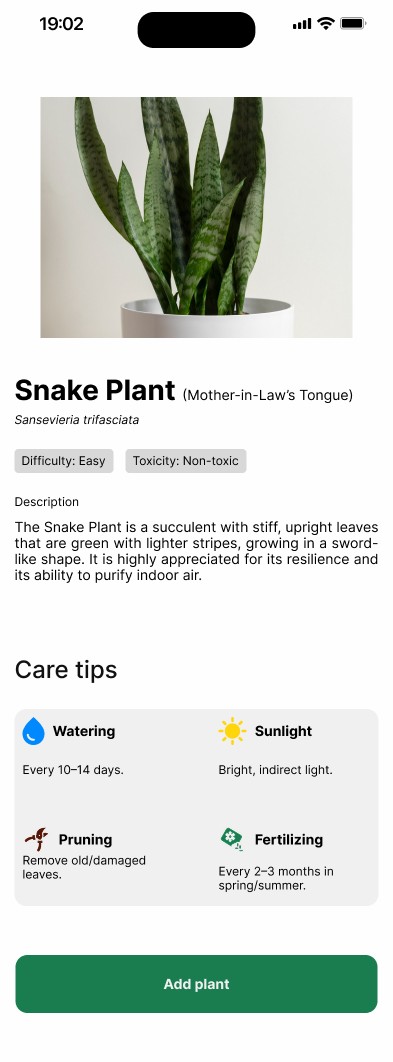
Some users found the plant care tips difficult to scan and understand quickly.

Users may feel uncertain about what to do when entering the app for the first time. The “Add Plant” action is not visually prominent enough, which can cause users to feel lost and unsure about the first step they should take within the app.

1
2

Some users found the plant care tips difficult to scan and understand quickly.

Mockups
Before usability study
After usability study
Mockups

Before usability study

After usability study

Before usability study
After usability study

Before usability study

After usability study

High-fidelity prototype

Usability study:
parameters

Study Type:

Unmoderated usability study


Participants:

5 participants


Location:

Vila Real, Portugal


Lenght:

8-10 min


Usability study:
findings

Based on the insights gathered during the usability study, the main findings and design-related problems were identified.

1

Users may feel uncertain about what to do when entering the app for the first time. The “Add Plant” action is not visually prominent enough, which can cause users to feel lost and unsure about the first step they should take within the app

2

Some users found the plant care tips difficult to scan and understand quickly.

High-fidelity prototype

Accessibility
considerations

1

The colour palette was designed to meet WCAG AA contrast standards, ensuring sufficient contrast between text, icons, and backgrounds for better readability.

2

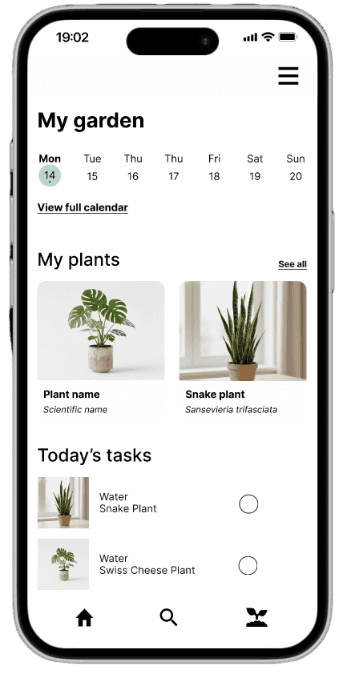
A clear visual hierarchy was implemented across the app, helping users easily distinguish between plant information, care tips, and primary actions such as reminders and adding new plants.

3

Plant care information was structured using short texts, icons, and spacing to improve readability and reduce cognitive load, making the content easier to scan and understand.

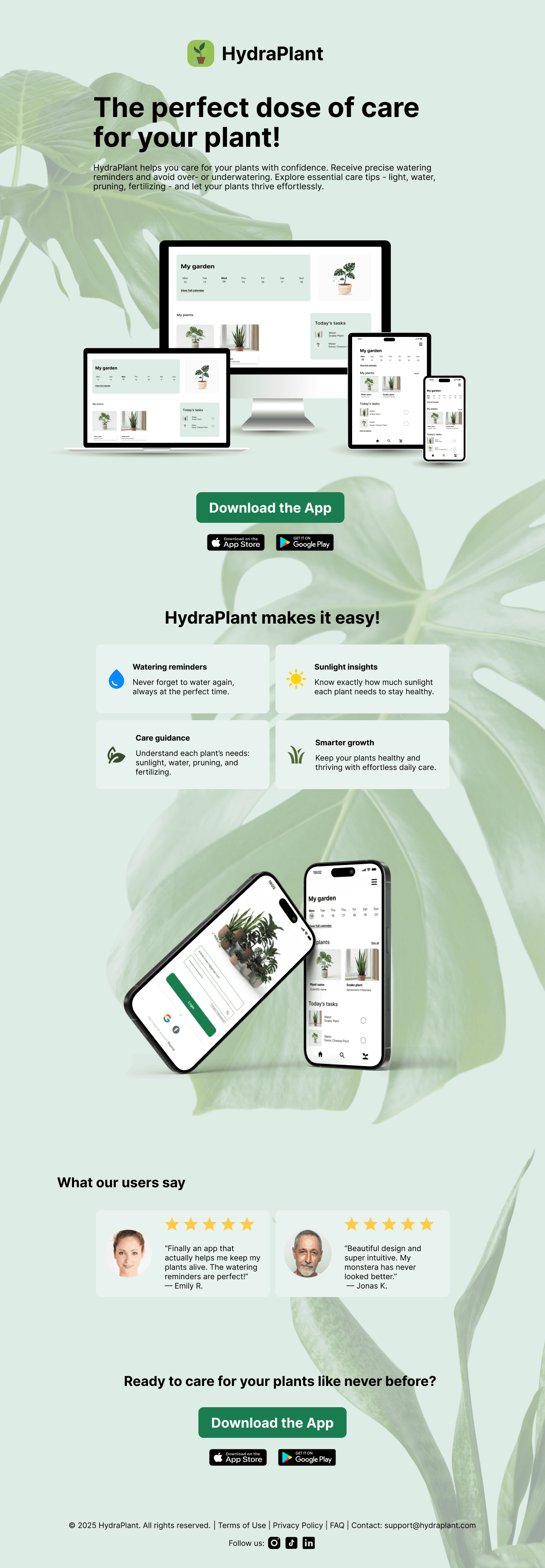
Landing page
Accessibility considerations
1

The colour palette was designed to meet WCAG AA contrast standards, ensuring sufficient contrast between text, icons, and backgrounds for better readability.

2
2

A clear visual hierarchy was implemented across the app, helping users easily distinguish between plant information, care tips, and primary actions such as reminders and adding new plants.

3

Plant care information was structured using short texts, icons, and spacing to improve readability and reduce cognitive load, making the content easier to scan and understand.

1

The colour palette was designed to meet WCAG AA contrast standards, ensuring sufficient contrast between text, icons, and backgrounds for better readability.

2
2

A clear visual hierarchy was implemented across the app, helping users easily distinguish between plant information, care tips, and primary actions such as reminders and adding new plants.

3

Plant care information was structured using short texts, icons, and spacing to improve readability and reduce cognitive load, making the content easier to scan and understand.

Takeaways

Takeaways

Impact:

The HydraPlant project focused on addressing common challenges faced by plant owners, such as forgetting to water plants, not understanding specific care needs, and feeling overwhelmed by plant care information.

Through the design process and usability testing, it became clear how much clarity, guidance, and timely reminders can impact users’ confidence and consistency in plant care. By simplifying care tips and highlighting key actions, the app helps users feel more in control and reduces anxiety around keeping plants healthy.

Features such as personalised care reminders, clear plant profiles, and an intuitive structure transform plant care into a more manageable and rewarding daily habit.

What I Learned:


Developing HydraPlant helped me strengthen key UX and product design skills, including:

  • Understanding user uncertainty: recognising how users can feel lost when first entering an app and the importance of clearly guiding the first action.


  • Simplifying complex information: learning how to present plant care tips in a way that feels approachable, scannable, and easy to understand.


  • Visual hierarchy and prioritisation: using hierarchy to highlight essential actions and reduce cognitive load.


  • Accessibility and clarity: designing with readability and accessibility in mind to support users with different levels of experience and knowledge.


  • User-centred iteration: applying usability feedback to refine navigation, content structure, and overall experience.


This experience reinforced the importance of designing solutions that balance simplicity, clarity, and guidance, helping users care for their plants with confidence and consistency.

Next steps
1

Gather UX/UI feedback from experienced designers: share the HydraPlant prototype with more experienced designers to collect insights that can further improve the user experience and interface clarity.

2

Document and iterate on feedback: organise the feedback received and apply design refinements to make plant care actions, navigation, and information hierarchy more intuitive and accessible.

3

Validate through usability testing: conduct usability tests with plant owners in real-life contexts to ensure that reminders, care tips, and navigation support users’ needs in a practical and reliable way.

1

Gather UX/UI feedback from experienced designers: share the HydraPlant prototype with more experienced designers to collect insights that can further improve the user experience and interface clarity.

2

Document and iterate on feedback: organise the feedback received and apply design refinements to make plant care actions, navigation, and information hierarchy more intuitive and accessible.

3

Validate through usability testing: conduct usability tests with plant owners in real-life contexts to ensure that reminders, care tips, and navigation support users’ needs in a practical and reliable way.

Landing page

Mockups

Before usability study
After usability study
Before usability study
After usability study
Before usability study
After usability study
Before usability study
After usability study

Next steps

1

Gather UX/UI feedback from experienced designers: share the HydraPlant prototype with more experienced designers to collect insights that can further improve the user experience and interface clarity.

2

Document and iterate on feedback: organise the feedback received and apply design refinements to make plant care actions, navigation, and information hierarchy more intuitive and accessible.

3

Validate through usability testing: conduct usability tests with plant owners in real-life contexts to ensure that reminders, care tips, and navigation support users’ needs in a practical and reliable way.

User research: summary

For this project, I conducted interviews with plant owners from my family and social circle.

Initially, I assumed that their main concern was simply remembering to water their plants occasionally. However, the research revealed broader needs: many struggled with overwatering or underwatering, and some lacked knowledge about the specific care requirements of each plant. Users also expressed a desire for a simple, reliable way to maintain healthy plants without stress. These insights allowed me to create a persona reflecting both the frustration of inconsistent plant care and the motivation to adopt an easy, guided, and dependable solution.